
Did you know that over 60% of what people understand when someone is speaking comes from nonverbal signals? A study in the Journal of Nonverbal Behavior proved this back in 2016. Knowing how to read body language sports debates provides a real edge. I have spent hours watching sports commentators and I have noticed that they often miss tiny nonverbal cues. Changes in posture, brief flashes across the face and small hand movements are ignored. This article will break down how understanding these unspoken signals will give you a huge advantage when understanding sports arguments. We will get into the nitty gritty of body language sports debates.
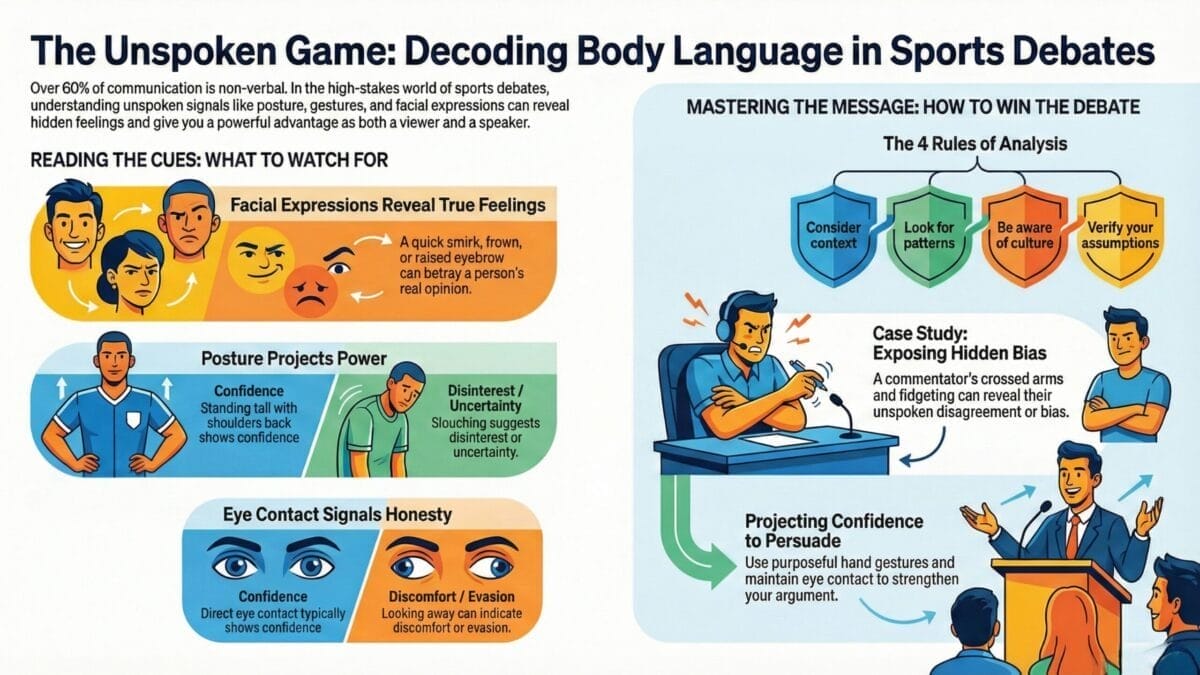
The body speaks all the time, even when someone is not saying anything. During heated sports debates, feelings are strong and people take opposing sides. This makes reading body language essential. When I am watching a debate, these are the things I focus on:
- Facial Expressions: An eyebrow that goes up, a small smile, or a wrinkled forehead can show disbelief, agreement or shock. These quick expressions can tell you how the person truly feels.
- Eye Contact: Usually, when someone looks you in the eye, they are being honest and confident. If they look away, they may be uncomfortable, lying or not sure of themselves. Keep in mind that different cultures have different rules about eye contact.
- Posture: If someone stands up straight, they are showing power and control. Slouching may show they are not interested or unsure. How someone stands is very important in a debate.
- Gestures: Moving your hands can make your argument stronger, show how you feel and keep the audience interested. Fidgeting can hurt your believability.
- Proxemics: How far apart people stand sends a message. If someone is too close, it can feel aggressive, if they are too far away, it can feel distant.
How I Analyze Body Language During Sports Debates
To understand these nonverbal signals, you have to watch closely and understand the situation. Do not jump to conclusions based on just one thing you see. Here is how I look at body language sports debates:
- Know the Situation: What is the debate about? Who is involved? What is the mood in the room? All of these things change how body language should be understood.
- Look for What Keeps Happening: Pay attention to actions that happen again and again instead of just once. If someone keeps looking away when a certain topic comes up, they are likely uneasy about it.
- Understand Cultural Differences: Nonverbal signals are different across cultures. A gesture that shows respect in one culture could be offensive in another.
- Make Sure You are Right: If you can, check your assumptions with more information. Do their words match what their body is saying? Do other people see it the same way you do?
Let us look at a few examples of how nonverbal communication changes sports arguments.
Here are some examples:
Example 1: How Confidence Matters in Sports Debates
Imagine a debate about the greatest basketball player ever. One person brings up stats to support their point. Yet, they are slouching, their voice is shaky and they will not look at anyone. This weakens their argument. The other person does not have as much data. However, they stand tall, speak with confidence and look everyone in the eye. People agree with the confident person more, even with weaker data.
Example 2: Exposing Hidden Bias Through Body Language
While breaking down a bad call in a football game, a commentator keeps looking away from their coworker. They are playing with a pen and have their arms crossed. These nonverbal cues show they are uneasy with the topic or do not agree with the other commentator. Viewers see these signals and think the commentator is not being truthful or is biased when talking about the play. Their nonverbal communication shows their hidden bias.
For sports commentators and fans, better presentation skills can make you much more persuasive. Here are some tips:
- Show Confidence: Stand up straight, pull your shoulders back and hold your head high. This tells people you are confident and in charge.
- Keep Eye Contact: Look your audience in the eye. This shows you are interested and honest.
- Use Gestures on Purpose: Use your hands to make your points stronger and show how you feel. Do not fidget or make nervous gestures because it takes away from your message.
- Control Your Facial Expressions: Pay attention to your facial expressions. Make sure they match your message. Smile when it is right and do not frown or scowl without meaning to.
- Be Yourself: Let your real personality come out. Being real builds trust with your audience.
It is very helpful to understand nonverbal signals, but you must use this information the right way. Do not judge people just based on their body language. Use it as one piece of information to understand the whole situation better. These are the rules I follow:
- Do Not Stereotype: Do not assume everyone in a certain group acts the same way.
- Respect Privacy: Do not stare or look at people too closely because it can make them uncomfortable.
- Focus on Actions: Use nonverbal signal understanding to know why people do what they do, not to judge them.
- Be Willing to Change Your Mind: Be ready to change how you see things as you learn more and understand the situation better.
As technology gets better, nonverbal signal understanding will likely be more important in sports discussions. Imagine computers breaking down facial expressions, gestures and posture during a debate. This would give viewers real time information on the feelings and confidence of the people involved. It could change how we watch and understand sports debates, making them more interesting and informative.
So what is the takeaway? If you understand nonverbal signals, you will understand sports interactions better. By paying close attention to facial expressions, eye contact, posture and gestures, you will learn about the feelings, confidence and potential biases of the people involved. Remember to understand the situation, look for patterns, know cultural differences and make sure you are right. As technology gets better, signal understanding in sports discussions will become even more complex and informative.

Vince Douglas Gregory is the ‘petulant puppet master’ of a sports media landscape addicted to scripted rage and performance art. As the architect of VDG Sports, he bypasses the corporate talking heads to expose the unfiltered truth behind the narratives.
An unstable thinker and astute scholar, Vince thrives on dismantling the mediocre click-bait addicts who trade reality for engagement. If you want boring stats, go elsewhere. If you want the raw reality of the game, you’re in the right place. Consider yourself warned.