
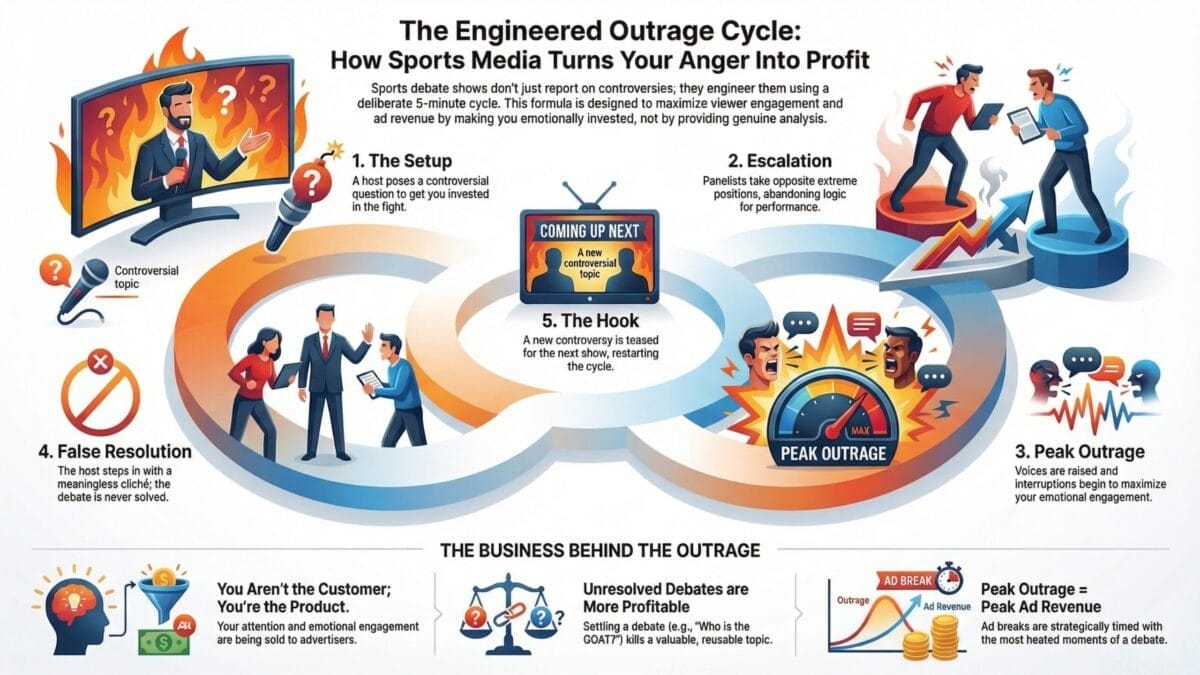
The world of sports is a financial behemoth, generating billions of dollars and igniting fierce passions. This monetary influx and emotional investment inevitably sparks endless debates about every conceivable aspect of competition. I have been watching closely. What will the future of sports debates actually look like? I will explore the emerging trends, technological advances and evolving formats that are changing these crucial discussions.
Consider this: Over 60% of sports fans actively engage in online debates, a testament to the growing accessibility and influence of digital platforms.
Data-Driven Discussions: The Current Standard
The reliance on simple gut feelings and charismatic commentators is over. Data reigns supreme. Statistics now form the foundation of arguments, challenging long held beliefs and providing far more sophisticated insights into both player and team performance.
Consider advanced metrics like basketball’s Player Efficiency Rating or baseball’s Wins Above Replacement. These metrics offer comprehensive evaluations, going beyond superficial stats such as points or home runs. They allow for deeper and better informed discussions about a player’s true value and their place in the rankings.
I have seen data visualizations completely transform sports debates. A well designed chart, for example, comparing quarterbacks’ completion rates when facing pressure has a far greater impact than a simple statement. This emphasis on data is making debates more substantive and less dependent on merely subjective opinions.
Artificial Intelligence: The Analyst Evolved
Artificial intelligence is a significant factor. AI can analyze massive data sets to identify patterns, predict outcomes and generate insights that humans could miss. That has major implications for sports analysis.
Imagine an AI system scrutinizing every single play of an entire football season to determine the very best defensive strategies to use against specific quarterbacks. This could completely reshape how we evaluate coaching decisions and player matchups. Early examples of this are already appearing in the form of AI powered draft reports and player projections. The potential here is nearly limitless.
Remember this: data and AI are merely tools and are not replacements for human insight. The very best debates will always fuse data driven insights with context, personal experience and the vital storytelling that humans contribute.
Social Media: Debate Democratized
The internet has altered who gets to participate in sports debates. Social media provides every single fan with a voice and a platform to share their views. This increased accessibility brings both advantages and disadvantages.
Social media promotes far greater inclusion and diversity in sports discussions. Fans drawn from all backgrounds are now able to connect with each other and with commentators, challenge established ideas and contribute fresh perspectives. I have witnessed firsthand how social media empowers previously unheard voices, improving the overall quality of discussions.
Social media can encourage negativity, misinformation and personal attacks. Online anonymity can foster poor behavior, hindering productive conversation. The main challenge for the future of sports debates is learning how to benefit from the power of social media while minimizing its negative impacts.
Interactive Platforms: Engaging the Fans Directly
One promising trend is the emergence of interactive platforms that allow fans to participate directly in debates. Polls, quizzes and live question and answer sessions can heighten fan engagement and cultivate a real sense of community. Some platforms even experiment with fan voting, allowing viewers to weigh in on arguments and determine the outcome of a debate.
I believe that these interactive formats can deepen fan interest in debates and increase their relevance. By providing viewers with a chance to express their opinions, they are far more likely to pay attention and become emotionally invested in the arguments.
New Debate Formats: More Than Talking Heads
The traditional sports debate format, featuring commentators shouting at each other across a table, is losing its appeal. While these shows still offer some value, viewers now crave new and engaging formats that better capture the nuances of sports. Originality is crucial to the future of sports debates.
New formats are appearing, drawing inspiration from documentaries, investigative reporting and even reality television. These shows move beyond superficial arguments, taking the time to explore the underlying narratives, personalities and controversies that define the sports world.
Mock Trials and Case Analyses: More Depth
The mock trial format offers an interesting alternative. Commentators act as lawyers, presenting evidence and making arguments before a judge (often a former player or coach). This specific structure promotes a far more organized examination of an issue, compelling participants to support their claims with verifiable facts.
The case analysis format is extremely valuable. A panel of experts meticulously examines a specific game, play or strategic decision. This allows for a more thorough review of athletic competition and can uncover details that a quick debate would certainly miss. I have participated in several of these and they require significantly more preparation than a typical short segment.
Virtual Reality/Augmented Reality: Debate Immersion
Looking ahead at the future of sports debates, virtual reality and augmented reality could be truly transformative. Imagine stepping onto the field to view a controversial play from many different angles or listening in on locker room conversations at halftime. These immersive experiences could completely transform how sports are analyzed and debated.
Virtual reality and augmented reality remain emerging technologies, but their potential is enormous. I envision a future where fans are able to participate in debates from anywhere, using virtual reality to create a shared space for interacting with both commentators and other fans.
Diverse Voices: Expanding the Conversation
Sports debates have been dominated by a narrow range of voices and perspectives. The future of sports debates must embrace inclusion, reflecting the diverse communities that comprise the sports world. That means providing a platform for women, people of color, LGBTQ+ individuals and other underrepresented groups.
I have seen how diverse perspectives enrich debates and challenge conventional wisdom. When commentators drawn from different backgrounds share their unique insights, it can foster a better understanding of complex issues. It also makes debates more appealing to a far wider audience.
Mentoring and Development: Inclusion Built
Creating a more diverse debate community requires efforts to identify, train and support promising individuals drawn from underrepresented communities. This could include mentorship programs, internships and other initiatives designed to cultivate diverse talent.
Challenging existing power structures and biases is also essential. Broadcasters and media outlets must be willing to embrace new voices, even if this disrupts established norms. The sports world is definitely ready for this specific change.
Ethical Considerations: A Tech Landscape Navigated
The rise of debate technology raises important ethical questions. I believe we must ask ourselves: How do we protect against AI bias or manipulation? How can we safeguard the privacy of both athletes and fans when collecting and analyzing data? I feel that addressing these questions is crucial to ensuring the integrity of the future of sports debates.
One major concern is the potential misuse of deepfakes and synthetic media to spread misinformation or damage the reputation of athletes. Developing technology to detect and counter these threats is critically important. I have seen opinions swayed by fabricated images and videos elsewhere, and these tactics could easily infiltrate the sports world.
Transparency and Accountability: Building Trust Earnestly
Transparency and accountability are essential for building trust in debate technology. AI should operate in an open and auditable manner. Data collection should adhere to ethical principles. Systems must be in place to hold individuals and organizations accountable for misusing debate technology.
The purpose is to use debate technology to improve the caliber of discussions, not degrade them. This requires a real commitment to ethical principles and adapting effectively to change.
Media Literacy: Critical Thinking Paramount
In a world overflowing with misinformation, media literacy is more important than ever. Fans must be capable of critically evaluating information and distinguishing between credible sources and falsehoods. This is especially important in sports debates, where emotions are high and biases can cloud judgment. A media literate fanbase is essential to the future of sports debates.
I recommend educational programs designed to improve media literacy. Schools should include courses on critical thinking, source evaluation and media analysis. Broadcasters also have a responsibility to provide factual information.
Fact Checking: Verifying the Truth Rigorously
Rigorous fact checking and source verification are important tools for combating misinformation. Fans should consult multiple sources and question claims that are not supported by evidence. Broadcasters should invest in thorough fact checking and hold commentators accountable for sharing inaccuracies.
By promoting media literacy and critical thinking, we can empower a more informed fanbase capable of engaging in meaningful sports debates. This is an investment in the long term health of the sports community.
A Global Perspective: Connecting Fans Across the World
Sports debates transcend national borders. The internet connects fans around the world, allowing them to share perspectives on sports like soccer, basketball and cricket. This globalization of sports debate offers both advantages and disadvantages.
It promotes more diverse conversations. Fans drawn from different cultures can offer unique insights. I have seen this foster a more comprehensive understanding of athletic competition. Discussions about soccer tactics, for example, can be enhanced by incorporating perspectives from coaches and players in different leagues.
The globalization of sports debate can present challenges related to language barriers, cultural differences and time zone differences. Finding ways to bridge these divides and ensure inclusion is crucial. This requires patience and a willingness to learn about other cultures.
Multilingual Platforms: Overcoming Barriers
One way to address language barriers is to create multilingual platforms that allow fans to communicate in their native languages. These tools can help with comprehension and make it easier to participate in debates. While automated translation is improving, more progress is needed.
The future of sports debates is undeniably global. As sports continue to expand worldwide, embracing this global perspective and connecting fans worldwide is essential.
Sports and Entertainment: A Blurring
The lines between sports and entertainment are blurring. Celebrities endorse products and athletes participate in reality television shows. Sports debates are following this trend. Commentators are adopting more theatrical personas and debates are resembling staged performances.
This shift is not negative, but understanding its potential consequences is important. The emphasis could shift from factual accuracy to mere presentation. Commentators might prioritize entertainment over careful analysis. This could undermine the integrity of debates and lead to a less informed audience.
The merging of sports and entertainment could also amplify drama. Commentators might intentionally create conflict to attract attention. This could introduce negativity into debates and hinder productive conversation.
Authenticity: Staying True
To address these challenges, authenticity and integrity are paramount. Commentators should strive to provide accurate analysis, even if this is not sensational. Broadcasters should avoid prioritizing drama over factual content. The future of sports debates depends on this commitment.
The aim is to strike a healthy balance between entertainment and information. Sports debates can be both engaging and informative. It is crucial to prevent entertainment from overshadowing factual accuracy. This requires upholding ethical standards and prioritizing the interests of the audience.
Mental Health: Well Being is Key
The pressures on athletes can negatively impact their mental health. Sports debates, which often subject athletes to intense scrutiny, can exacerbate these issues. It is important to be mindful of our word choices and encourage positive discussion.
Commentators should use a respectful tone. While holding athletes accountable is important, acknowledging their humanity and emotional vulnerability is also crucial. Personal attacks should never be accepted.
Positive Examples: Inspiring All
Highlighting positive examples is another way to promote mental health in the sports community. Athletes who openly discuss mental health challenges can inspire others to seek help and reduce the stigma surrounding mental illness. Commentators can share these messages and foster a more supportive culture.
The future of sports debates should prioritize mental health. By being careful with our words and highlighting positive examples, we can create a more supportive debate community that benefits both athletes and fans.
Conclusion: Embrace the Future Ahead
The future of sports debates is dynamic, driven by data, technology and the need for more inclusion. As we embrace these advancements, prioritizing ethical considerations, promoting media literacy and fostering supportive discussion is essential. By adhering to these principles, sports debates can remain a valuable part of the sports world. This transformation is underway and we must guide it responsibly.

Vince Douglas Gregory is the ‘petulant puppet master’ of a sports media landscape addicted to scripted rage and performance art. As the architect of VDG Sports, he bypasses the corporate talking heads to expose the unfiltered truth behind the narratives.
An unstable thinker and astute scholar, Vince thrives on dismantling the mediocre click-bait addicts who trade reality for engagement. If you want boring stats, go elsewhere. If you want the raw reality of the game, you’re in the right place. Consider yourself warned.