
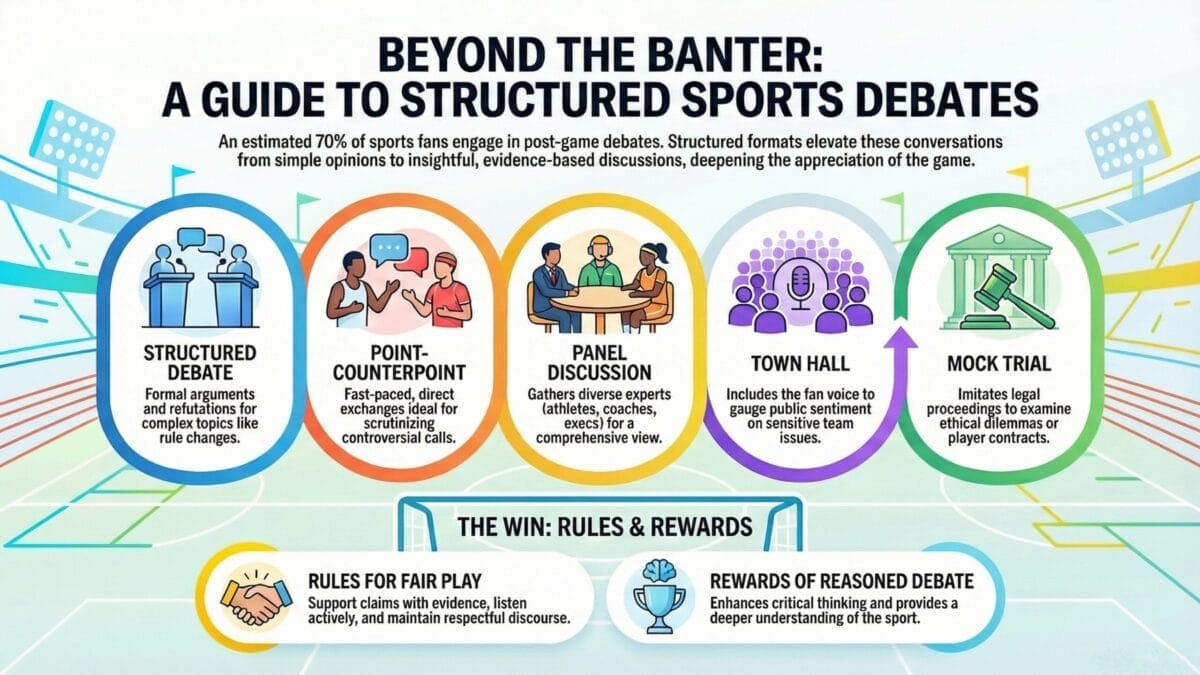
Did you know that a whopping 70% of sports fans engage in postgame debates? Sports are more than just the thrill of the game; they are battlegrounds for passionate arguments, strategic breakdowns and lively discussions. The ability to dissect and debate the finer points of sports is part of what makes being a fan so engaging. But have I ever stopped to consider the different structures these debates can take? Understanding debate formats in sports can sharpen your analytical skills and add another layer to your appreciation for the games we love. A study even hints that reasoned arguments can heighten our enjoyment of sports. Let us jump into the world of sports debates, examining the common formats, essential rules and benefits of engaging in thoughtful discussions.
Why Debate Structures Matter
Sports encompass physical prowess, complex strategies, ethical considerations and a multitude of viewpoints. A well structured debate offers a framework for examining these dimensions. Clear guidelines encourage respectful and productive conversations, which is a welcome change from the unsubstantiated opinions that often proliferate on social media. Structured debates push participants to back up their claims with logic and verifiable evidence, leading to more insightful discussions. I think this is a critical aspect that is often overlooked.
Common Debate Formats in Sports
Here are several common debate styles you are likely to encounter in the sports world:
1. Structured Debate: The Basics
This format mirrors academic or political debates. Two sides are given time to present arguments, refute claims and summarize their positions. It is especially useful for complicated subjects such as the long term impact of rule changes or the merits of different playing styles. Structured debates prioritize fairness and thoroughness, requiring participants to anticipate counterarguments and present compelling evidence. I have seen this format used effectively to analyze complex issues.
2. Point-Counterpoint: Direct Engagement
Point counterpoint involves a direct exchange where individuals present specific points and respond immediately to each other’s statements. This encourages quick thinking and adaptability. It is an effective method for scrutinizing specific controversies such as questionable officiating calls or critical in game decisions. This format grabs audience attention by putting disagreements front and center. It is a fast paced and engaging style.
3. Panel Discussions: Diverse Perspectives
Panel discussions bring together experts with different perspectives to discuss a particular topic. A moderator guides the conversation, asking questions and ensuring equal speaking opportunities for all participants. The biggest benefit is the diversity of viewpoints, providing a comprehensive understanding of the subject matter. A panel on college sports, for instance, might include a former athlete, athletic director, coach and university administrator. The varied experiences make for a richer discussion.
4. Town Hall Meetings: The Fan Voice
Town hall meetings include fans, giving them the chance to ask questions and share their opinions with experts and analysts. This format is useful for addressing sensitive issues or gauging public sentiment on contentious matters such as stadium funding or team rebranding. It represents an opportunity for fans and decision makers to connect, fostering openness and accountability, though it can occasionally lack a formal structure. I believe this direct interaction is incredibly valuable.
5. Mock Trials: Sports and the Law
Mock trials imitate legal proceedings, often focusing on ethical or legal dilemmas in sports. Participants take on the roles of attorneys, witnesses and judges, presenting evidence and arguments based on actual cases or hypothetical scenarios. This helps examine legal matters such as player contracts, antitrust violations or liability for injuries. Mock trials challenge participants to think critically and understand legal principles, showing the legal system’s impact on sports. It is an engaging way to explore the intersection of law and sports.

Sports Debate Rules: Essential Guidelines
Regardless of the specific format, these rules ensure a fair and valuable sports debate:
- Respectful Discourse: Maintain civility. Refrain from personal attacks and focus on the arguments.
- Evidence Based Claims: Support your statements with concrete evidence, such as statistics, expert opinions or news reports.
- Clear Communication: Express your thoughts precisely and simply, avoiding convoluted language.
- Active Listening: Pay close attention to opposing viewpoints and respond thoughtfully.
- Time Management: Adhere to time constraints to allow everyone an opportunity to speak.
Benefits of Understanding Types of Sports Debates
Knowing the different types of sports debates and their rules provides several advantages:
- Enhanced Critical Thinking: Debates force you to assess information, evaluate arguments and form opinions based on evidence.
- Improved Communication Skills: Debates allow you to practice public speaking, persuasive writing and attentive listening.
- Deeper Understanding of Sports: Debates expose you to diverse perspectives, enriching your knowledge of the games.
- Greater Appreciation for Fair Play: Debates emphasize adherence to rules and respect for differing viewpoints, promoting good sportsmanship.
Examples of Sports Debates
Sports history is full of debates that have reshaped how we perceive the games. Here are a few examples:
- Michael Jordan versus LeBron James: Who is the greatest player of all time?
- Deflategate: The controversy surrounding the New England Patriots’ use of underinflated footballs.
- The designated hitter rule in baseball: A rule that continues to spark debate.
The Future of Structured Debate Formats
As sports increasingly use data analysis, structured debate formats will have a bigger role in shaping our understanding. The growth of sports statistics will spur more debates, with participants using advanced metrics to support their positions. The rising popularity of esports will also fuel debate, as fans grapple with the strategies involved in competitive gaming. These formats will enable us to manage the complexities of sports and maintain factual discussions. I believe this will lead to more informed and engaging conversations.
Conclusion
Diving into debate formats in sports elevates the conversation and passion around the games. Town hall meetings, structured debates and point counterpoint discussions all offer avenues to examine issues and nurture a more informed sports community. Embracing these formats and following the rules enriches our sports discussions and unlocks the power of informed debate. It is a win win for everyone involved.

Vince Douglas Gregory is the ‘petulant puppet master’ of a sports media landscape addicted to scripted rage and performance art. As the architect of VDG Sports, he bypasses the corporate talking heads to expose the unfiltered truth behind the narratives.
An unstable thinker and astute scholar, Vince thrives on dismantling the mediocre click-bait addicts who trade reality for engagement. If you want boring stats, go elsewhere. If you want the raw reality of the game, you’re in the right place. Consider yourself warned.